
Israel–USA vs Iran: Live Updates, What’s Happening Now and Why the World Is Watching
The escalating confrontation between Israel, the United States, and Iran has become one of the most dangerous geopolitical crises of the decade. What began as targeted military strikes has quickly evolved into a wider regional conflict affecting multiple countries, global markets, and international security.
Governments, analysts, and millions of people around the world are closely following developments as the conflict continues to intensify. In this detailed guide, we explain what is happening now, why the conflict started, and why the entire world is watching closely.
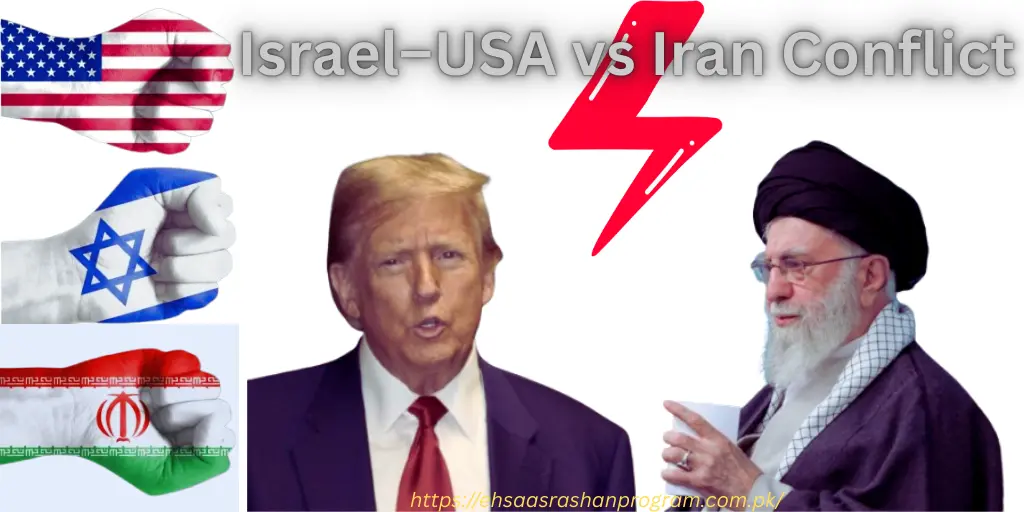
Live Updates: What’s Happening Now in the Israel–USA vs Iran Conflict
The latest developments indicate a rapidly escalating situation in the Middle East.
- Joint military strikes by the United States and Israel have targeted Iranian military bases, missile facilities, and nuclear-related sites.
- Iran has retaliated with missile and drone attacks against Israeli territory and U.S. military bases in the Gulf region.
- Several neighboring countries are now involved indirectly due to security concerns and military alliances.
- Oil supply routes and international shipping lanes are under threat, raising fears of a global economic shock.
Reports suggest that hundreds of targets inside Iran have been struck, and the fighting has resulted in significant casualties and widespread destruction.
Meanwhile, political leaders and international organizations are urging restraint to prevent the crisis from escalating into a full-scale regional war.
Also read Talk 2 CM Punjab – How to Register Complaints Online
How the Conflict Started
The roots of the conflict between Israel and Iran go back decades.
Before 1979, Iran and Israel maintained diplomatic relations. However, after the Iranian Revolution, Iran adopted a strong anti-Israel stance and began supporting groups opposed to Israel across the Middle East.
Over time, tensions grew due to several key issues:
- Iran’s nuclear program
- Iran’s support for regional militias and proxy groups
- Israel’s concerns about security threats
- U.S. involvement in Middle Eastern geopolitics
These tensions created a volatile environment that eventually led to direct military confrontation.
Operation Lion’s Roar: The Military Campaign
The latest phase of the conflict began with a coordinated military campaign known as Operation Lion’s Roar.
This operation involved air and missile strikes by Israeli and U.S. forces on Iranian targets, including major cities and strategic military sites.
Key targets reportedly included:
- Missile launch facilities
- Air defense systems
- Nuclear-related installations
- Military command centers
The strikes marked one of the largest direct attacks on Iranian territory in modern history.
The Assassination of Iran’s Supreme Leader
One of the most dramatic moments in the conflict was the killing of Ali Khamenei, Iran’s long-time Supreme Leader.
He was reportedly killed during an airstrike targeting senior Iranian leadership in Tehran.
His death triggered:
- Political instability within Iran
- Emergency leadership meetings
- Strong vows of retaliation against Israel and the United States
The incident significantly intensified the conflict and increased fears of a prolonged war.
Israel Declares National Emergency
Following Iranian missile retaliation, Israel declared a nationwide state of emergency.
The government implemented several emergency measures:
- Closure of schools and public spaces
- Mobilization of thousands of military reservists
- Increased border security
- Restrictions on air travel and large gatherings
These steps were taken to protect civilians amid the threat of missile attacks.
Iran’s Retaliation and Regional Escalation
Iran responded to the strikes with a series of missile and drone attacks targeting Israel and U.S. military bases in the Middle East.
The retaliation expanded the conflict beyond Iran and Israel, affecting multiple countries in the region.
Targets included military installations in:
- Saudi Arabia
- Bahrain
- Qatar
- Kuwait
- The United Arab Emirates
At the same time, Iran-aligned groups such as Hezbollah launched attacks from Lebanon against Israeli targets, further widening the conflict.
The Strait of Hormuz Crisis
One of the most serious global consequences of the conflict is the disruption of the Strait of Hormuz.
This narrow waterway is one of the most important energy routes in the world.
Approximately 20% of global oil shipments pass through this strait, making it a critical artery for international trade.
Due to the ongoing military tension:
- Shipping traffic has been disrupted
- Oil tankers have been damaged
- Energy markets have become volatile
Experts warn that if the strait is fully blocked, global oil prices could skyrocket, potentially triggering a worldwide economic crisis.
Why the World Is Watching Closely
This conflict is not just a regional issue it has global implications.
1. Risk of a Wider Middle East War
Many countries in the Middle East have alliances with either Iran or the United States.
If the conflict continues to expand, it could draw in:
- Saudi Arabia
- Turkey
- Russia
- European powers
Such a scenario could destabilize the entire region.
2. Threat to Global Oil Supply
The Middle East is the world’s most important oil-producing region.
Any disruption to shipping routes or oil infrastructure could affect:
- Fuel prices worldwide
- Global inflation
- Economic growth
Energy markets are already reacting to the uncertainty.
3. Global Security Concerns
A prolonged conflict could also lead to:
- Cyber warfare
- Terror attacks by proxy groups
- Military escalation between major powers
This is why international organizations such as the United Nations are calling for urgent diplomatic efforts.
4. Political Consequences
The conflict is also shaping political debates in many countries.
For example, lawmakers in the United States are debating whether the president should require congressional approval for extended military action against Iran.
Such discussions highlight the seriousness of the situation.
Humanitarian Impact
Beyond the geopolitical consequences, the conflict is causing significant human suffering.
Reports indicate:
- Thousands injured
- Hundreds killed
- Major damage to infrastructure
- Displacement of civilians
Some strikes have reportedly hit civilian areas, increasing international concern about humanitarian conditions.
Possible Scenarios for What Happens Next
Experts believe the conflict could develop in several ways:
1. Diplomatic De-escalation
International mediation could lead to negotiations and a ceasefire.
2. Prolonged Regional Conflict
Proxy groups and regional powers could continue fighting indirectly for months or years.
3. Global Economic Shock
Energy disruptions could trigger major market instability.
4. Full-Scale War
In the worst-case scenario, the conflict could escalate into a broader international war.
Final Thoughts
The confrontation between Israel, the United States, and Iran represents one of the most serious global crises in recent years.
With military strikes, political tensions, and economic risks increasing, the situation remains extremely volatile.
For now, the world continues to watch closely as governments, diplomats, and military leaders determine whether the conflict will escalate further or move toward peace.