
Punjab Chief Minister’s Special Initiative for Cancer Patients
Cancer remains one of the most challenging health conditions worldwide, and in countries like Pakistan, access to timely diagnosis and affordable treatment is often limited. Recognizing this urgent need, the government of Punjab has introduced a groundbreaking program: the Punjab Chief Minister’s Special Initiative for Cancer Patients. This initiative is designed to ease the burden on patients and families while improving survival outcomes through accessible and high-quality care.
In Pakistan, thousands of new cancer cases are diagnosed each year, yet a significant proportion of patients struggle to access early screening, specialized care, and consistent treatment due to financial and infrastructural barriers. Rural populations, in particular, face additional challenges such as limited healthcare facilities, lack of awareness, and delayed diagnosis, which often results in advanced-stage presentations. These disparities highlight the urgent need for comprehensive, government-led interventions that prioritize both prevention and treatment.
The Punjab Chief Minister’s Special Initiative for Cancer Patients emerges as a timely and strategic response to these challenges. By integrating financial assistance with improved healthcare delivery systems, the program aims not only to treat cancer but also to strengthen the overall oncology landscape in the province. It reflects a shift toward patient-centered care, where affordability, accessibility, and quality are addressed simultaneously. Ultimately, this initiative represents a significant step toward reducing the cancer burden and ensuring that life-saving treatment is within reach for all segments of society.
Overview of the Initiative
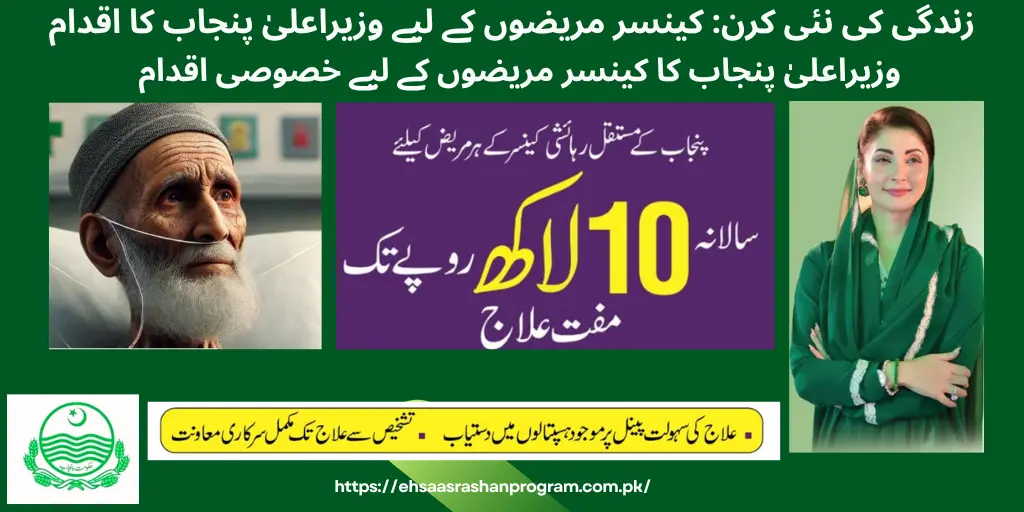
Under the leadership of Maryam Nawaz, this initiative aims to provide free or subsidized cancer treatment to deserving patients across Punjab. It reflects a strong commitment to public health, particularly for life-threatening diseases that require long-term and expensive care.
The program focuses on:
- Financial support for cancer treatment
- Access to modern healthcare facilities
- Early diagnosis and screening programs
- Strengthening oncology departments in public hospitals
Key Objectives
1. Affordable Cancer Treatment
Cancer treatment is often prolonged, complex, and extremely expensive, with costs running into millions of rupees for a single patient. For many families in Pakistan, especially those without insurance or stable income, this financial burden can be devastating sometimes forcing patients to delay or completely abandon treatment.
The Punjab Chief Minister’s Special Initiative directly addresses this challenge by ensuring that low-income and vulnerable patients receive free or highly subsidized care. This includes access to essential treatment modalities such as chemotherapy, radiotherapy, and surgical interventions. In addition, the program often covers diagnostic tests, medications, and follow-up care, reducing out-of-pocket expenses. By removing financial barriers, the initiative not only improves treatment adherence but also significantly increases the chances of survival and recovery.
Punjab Chief Minister’s Special Initiative
2. Early Detection and Prevention
Early detection is one of the most effective ways to reduce cancer-related mortality. When cancer is diagnosed at an early stage, treatment is generally less aggressive, more affordable, and far more successful. However, in many parts of Punjab, lack of awareness and limited access to screening services result in late-stage diagnoses.
To tackle this, the initiative places strong emphasis on prevention and early detection through multiple strategies:
- Awareness campaigns: Public education programs are conducted to inform people about cancer symptoms, risk factors, and the importance of timely medical consultation.
- Free screening camps: Regular screening drives are organized in both urban and rural areas to detect cancers such as breast, cervical, and oral cancer at an early stage.
- Community outreach programs: Health workers engage directly with communities, particularly in underserved regions, to promote preventive behaviors and encourage early check-ups.
These efforts aim to shift the healthcare approach from reactive treatment to proactive prevention.
3. Improved Healthcare Infrastructure
The major barrier to effective cancer care is the lack of well-equipped healthcare facilities. Recognizing this, the government of Punjab is investing heavily in strengthening the province’s healthcare infrastructure.
Key developments under the initiative include:
- Advanced oncology units: Establishment and expansion of specialized cancer treatment centers within public hospitals to provide comprehensive care under one roof.
- Modern diagnostic equipment: Installation of state-of-the-art technologies such as CT scanners, MRI machines, and radiotherapy equipment to ensure accurate and timely diagnosis.
- Training healthcare professionals: Continuous capacity-building programs for doctors, nurses, and technicians to enhance their expertise in oncology care and the use of modern medical technologies.
These improvements not only enhance treatment quality but also reduce patient load on a few major hospitals by decentralizing services.
4. Equity in Healthcare Access
Healthcare inequality remains a significant issue, with patients in rural and remote areas often lacking access to specialized medical services. Many individuals must travel long distances to major cities for diagnosis and treatment, leading to delays and additional financial strain.
This initiative aims to create a more equitable healthcare system by ensuring that cancer care services are accessible to all, regardless of geographic location. Efforts include:
- Expanding services to district and tehsil-level hospitals
- Establishing efficient referral systems between primary and tertiary care centers
- Providing support mechanisms for patients traveling from remote areas
By bridging the gap between urban and rural healthcare, the program ensures that every patient has a fair chance at receiving timely and effective cancer treatment.
Hospitals and Facilities Included
The program collaborates with major public hospitals across Punjab, including:
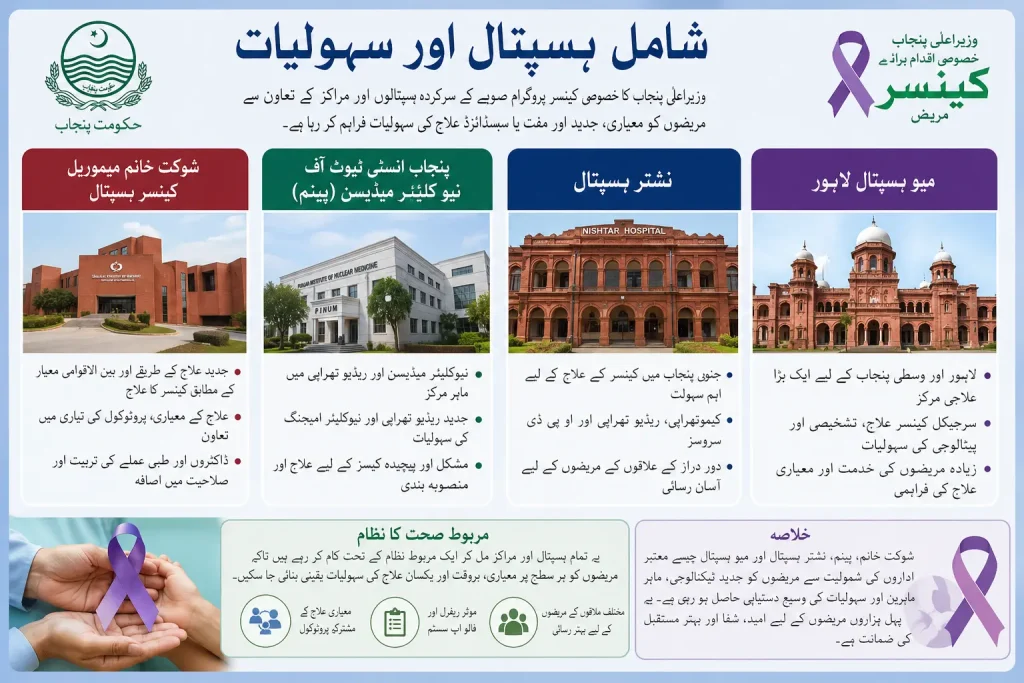
Shaukat Khanum Memorial Cancer Hospital
This internationally recognized cancer hospital plays a vital supportive role in the initiative. Although it operates as a charitable institution, its collaboration adds immense value through:
- Clinical expertise in advanced cancer management
- Development of standardized treatment protocols
- Training and capacity-building for doctors and healthcare staff
Its involvement helps elevate the overall quality of care within the public health system.
Punjab Institute of Nuclear Medicine
PINUM is a cornerstone of cancer treatment in the public sector, particularly known for its specialization in nuclear medicine and radiotherapy. Under the initiative, it provides:
- Advanced radiation therapy for various cancer types
- Diagnostic services such as nuclear imaging and scans
- Treatment planning for complex and high-risk cases
It serves as a major referral center for patients requiring specialized oncological interventions.
Nishtar Hospital
Located in southern Punjab, Nishtar Hospital plays a crucial role in expanding access to cancer care beyond major urban centers. Its contributions include:
- Chemotherapy and radiotherapy services
- Oncology outpatient and inpatient care
- Access to trained oncologists for underserved populations
This facility significantly reduces the need for patients from southern regions to travel to larger cities like Lahore.
Mayo Hospital
As one of the largest and oldest public hospitals in Pakistan, Mayo Hospital is a key pillar of the initiative. It offers:
- Comprehensive oncology departments
- Surgical cancer treatments
- Diagnostic and pathology services
Its high patient capacity allows it to serve a large population, making cancer treatment more accessible in central Punjab.
These institutions provide specialized oncology services, ensuring patients receive standardized care.
What Treatments Are Covered?
The initiative covers a wide range of cancer-related services:
- Chemotherapy sessions
- Radiotherapy treatments
- Surgical procedures
- Diagnostic tests (CT scans, MRIs, biopsies)
- Medications and supportive care
This comprehensive approach ensures patients are not forced to discontinue treatment due to financial constraints.
Also read Talk 2 CM Punjab – How to Register Complaints Online
Who Can Benefit?
The program primarily targets:
- Low-income families
- Patients without health insurance
- Individuals diagnosed with various types of cancer
Eligibility is usually determined through income verification and medical assessment.
Impact on Public Health
This initiative is expected to:
- Reduce cancer mortality rates
- Improve early diagnosis
- Decrease financial hardship for families
- Strengthen public trust in government healthcare
In a region where many patients delay treatment due to cost, this program could be transformative.
Challenges and Future Outlook
While the initiative is promising, some challenges remain:
- Ensuring transparency in patient selection
- Expanding coverage to all districts
- Managing the increasing patient load
However, with continued investment and monitoring, Punjab has the potential to build one of the strongest public cancer care systems in the region.
Final Thoughts
The Punjab Chief Minister’s Special Initiative for Cancer Patients represents a major step forward in healthcare reform. By prioritizing affordability, accessibility, and quality, the government is addressing one of the most pressing medical challenges faced by citizens.
For thousands of families, this initiative is more than just a policy it’s a chance at survival, dignity, and hope.