
Free Solar Panel Scheme 2026; PM Solar Program Gilgit Baltistan Details
The Government of Pakistan has launched the PM Solar Panel Scheme 2026 for Gilgit Baltistan to reduce electricity shortages and provide free or subsidized solar systems to eligible households. The 100MW solar project aims to eliminate long power outages and promote clean energy in remote mountainous areas. Here’s how you can check eligibility and apply. In a major move toward sustainable development and addressing chronic energy shortages, Prime Minister Muhammad Shehbaz Sharif has announced a comprehensive solar power scheme for Gilgit-Baltistan (GB). This initiative is part of a broader effort to ensure reliable, clean, and affordable electricity for one of Pakistan’s most remote and underserved regions.
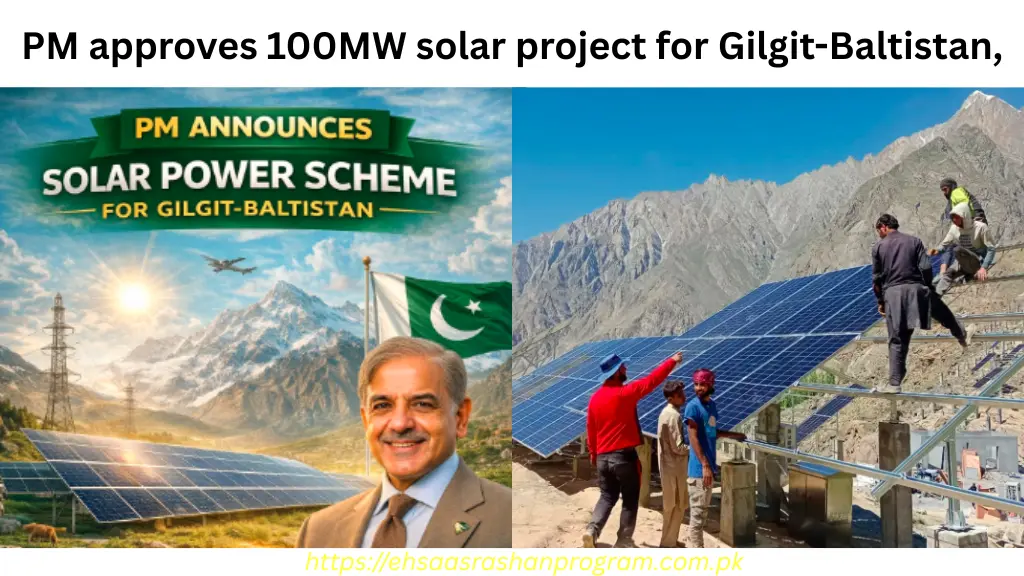
Aims and Significance of the Solar Scheme
The solar project aims to:
- Eliminate long hours of power outages in GB, where daily electricity shortages have been severe.
- Promote renewable energy and reduce dependence on fossil fuels.
- Empower local residents, businesses, and public services with sustained and eco-friendly electricity.
Gilgit-Baltistan’s unique geography mountainous and off the national grid has historically made conventional power solutions expensive and unreliable. Solar energy holds the promise of a stable, low-cost alternative that leverages abundant sunlight in the region.
Also read CM Punjab Laptop Program 2026 Updated
How to Apply for PM Solar Panel Scheme 2026
Residents of Gilgit-Baltistan can apply for the PM Solar Panel Scheme 2026 by following the official application process announced by the government. Below is a simple step-by-step guide:
Step 1: Check Your Eligibility
Before applying, make sure you meet the basic eligibility criteria:
- Must be a resident of Gilgit-Baltistan
- Belong to a low or middle-income household
- Have limited or no access to stable electricity
- Valid CNIC registered with NADRA
- Electricity usage within government-defined limits
Applicants are advised to check eligibility through the official government portal or local district administration office.
Step 2: Submit Required Documents
Eligible applicants will need to provide:
- Copy of CNIC
- Proof of residence in Gilgit-Baltistan
- Latest electricity bill (if available)
- Income verification (if required)
Applications may be submitted online (if portal is launched) or through designated government facilitation centers.
Step 3: Verification by Authorities
After submission:
- Authorities will verify CNIC and household details
- Electricity consumption data may be reviewed
- Field verification teams may visit selected households
Only verified applicants will move to the next phase.
Step 4: Solar Panel Installation Process
Once approved:
- Installation schedule will be shared with selected beneficiaries
- Certified technical teams will install solar panels and battery systems
- Basic usage and maintenance guidance will be provided
The system will include battery backup to ensure electricity supply during low sunlight hours.
Last Date to Apply for PM Solar Scheme 2026
The official last date for application has not yet been formally announced. Applicants are strongly advised to apply early once registration opens to avoid missing the opportunity.
Regular updates will be issued through official government notifications and district administration offices.
Why It Matters
- The 100 MW solar power project is expected to significantly reduce daily power shortages in Gilgit-Baltistan and promote clean energy deployment in a region that historically faces energy infrastructure challenges.
- Renewable energy projects such as this support Pakistan’s wider goals of energy sustainability and reduction in reliance on fossil fuels. Recent federal policy also reaffirms a strong commitment to solar and renewable energy expansion nationwide.
100 MW Solar Power Project: What’s Planned
The centerpiece of the program is a 100 megawatt (MW) solar photovoltaic power project approved and prioritized by the federal government. Here’s how it breaks down:
Project Structure
- 18 MW Rooftop Solar Programme: Solar installations on government and institutional buildings.
- 82 MW Utility-Scale Solar: Large-scale solar parks and fields across GB.
The layout aims at both distributed generation (close to where electricity is used) and utility-scale production to feed reliable power into local grids.
District Coverage and Deployment
The 100 MW project will spread across multiple districts in Gilgit-Baltistan, ensuring balanced energy access:
- Gilgit
- Skardu
- Diamer
- Hunza
- Ghanche
- Other nearby districts
Phased implementation ensures equitable distribution and support for essential services including government offices and healthcare facilities.
Project Status and Timeline
- The Executive Committee of the National Economic Council (ECNEC) has already approved the project, allocating almost Rs 25 billion under the Prime Minister’s Special Package.
- Officials expect the solar installations to be completed by 2027, with phases aligned to geographical and service priorities.
Implementation Highlights
To make the plan practical and resilient:
- Battery backup systems are being integrated to provide electricity even during low sunshine periods.
- Real-time monitoring systems will help manage generation and distribution.
- Local institutions will work with federal agencies to coordinate land use, infrastructure, and grid connections.
The prime minister has directed that the solar project be fast-tracked and monitored personally by federal authorities to ensure prompt completion and quality assurance.
official statement from PM Office
Why This Matters for Gilgit-Baltistan
1. Energy Access and Quality of Life
Many parts of GB currently suffer up to 18–20 hours of power outages each day. This affects homes, hospitals, education, tourism, and small businesses. Reliable solar power could dramatically improve daily life.
2. Economic Growth
- Stable electricity attracts investment and supports industrial activity.
- Farmers, artisans, and entrepreneurs can operate more efficiently and with lower costs.
3. Environmental Impact
Solar energy reduces greenhouse gas emissions and helps meet national climate goals by replacing costlier diesel and thermal power generation.
Challenges and Considerations
Despite the benefits, several challenges remain:
- Infrastructure connectivity: Extending distribution to remote valleys can be complex.
- Technical capacity: Skilled workforce and maintenance expertise will be essential.
- Funding and coordination: Continued federal support and inter-government coordination will be key to meet deadlines and quality standards.
However, the government’s clear commitment and high-level prioritization indicate strong institutional backing for overcoming these hurdles.
Also read E-Taxi: The Future of Urban Transportation
FAQs
1. Who is eligible for the PM Solar Panel Scheme?
Residents meeting income and electricity usage criteria are eligible.
2. Is the solar panel scheme completely free?
In most cases, the government provides free or subsidized systems for low-income households.
3. How can I apply for the solar scheme in Gilgit Baltistan?
You can apply through the official government portal or local administration offices.
4. What is the last date for application?
The last date will be announced officially. Always check updated notifications.
Conclusion: A Bright Future with Clean Energy
The solar power scheme for Gilgit-Baltistan marks a turning point for energy generation in the region. By leveraging renewable resources, the federal government is not only improving energy reliability but also supporting social and economic development.
This project could serve as a model for sustainable energy initiatives across Pakistan, particularly in areas that are off-grid or have high energy costs. As implementation progresses toward the 2027 target, Gilgit-Baltistan may soon become a symbol of clean and affordable power for mountainous and remote regions.




Empower local residents, businesses, and public services with sustained and eco-friendly electricity.(zindabad PMLN)
How can apply
please click on the link to apply online for PM Solar Power Scheme for Gilgit-Baltistan
https://solar.pmrugb.gov.pk/
Good
An outstanding project 👏
غچّھبےبےسےکسف
Good work
My house is locked because I have shifted to Gilgit city here bill pays by the owner now he submitted paid bill for solar panels already now I haven’t any bill to submit ,can I submit my old bill year 2022
I need lop top
https://ehsaasrashanprogram.com.pk/cm-punjab-laptop-program-2026-updated/
Aoa
Walaikum Assalam ishaq! how can i help you.
Hi …how to apply
hello iraj! please click here to apply . https://solar.pmrugb.gov.pk/
I m from Gilgit Baltistan
Ppp
Solar
Yes
Solar system
https://solar.pmrugb.gov.pk/
Due to electric bill submission compulsory most of people can not apply for solar panel I am one of them because my house is locked since 2023 due to migration from home town sharote to Gilgit city where I am on rented house owner pay my bill and he already submitted the bill for solar panels now I have no any other electric bill for submission my I submit my own old bill 2022 please guide me.thqnks
My house is locked because I have shifted to Gilgit city here bill pays by the owner now he submitted paid bill for solar panels already now I haven’t any bill to submit ,can I submit my old bill year 2022
hello Ayub! Please read the complete article to submit application. https://ehsaasrashanprogram.com.pk/pm-solar-panel-scheme-gb-2026/
How I apply for free solar panels
hello! click on this link to apply, https://solar.pmrugb.gov.pk/
Solar panel ahel
Solar panel for home add# Baig market danyore
Free solar panel sceme
Solar panel ahel